
CSM Series
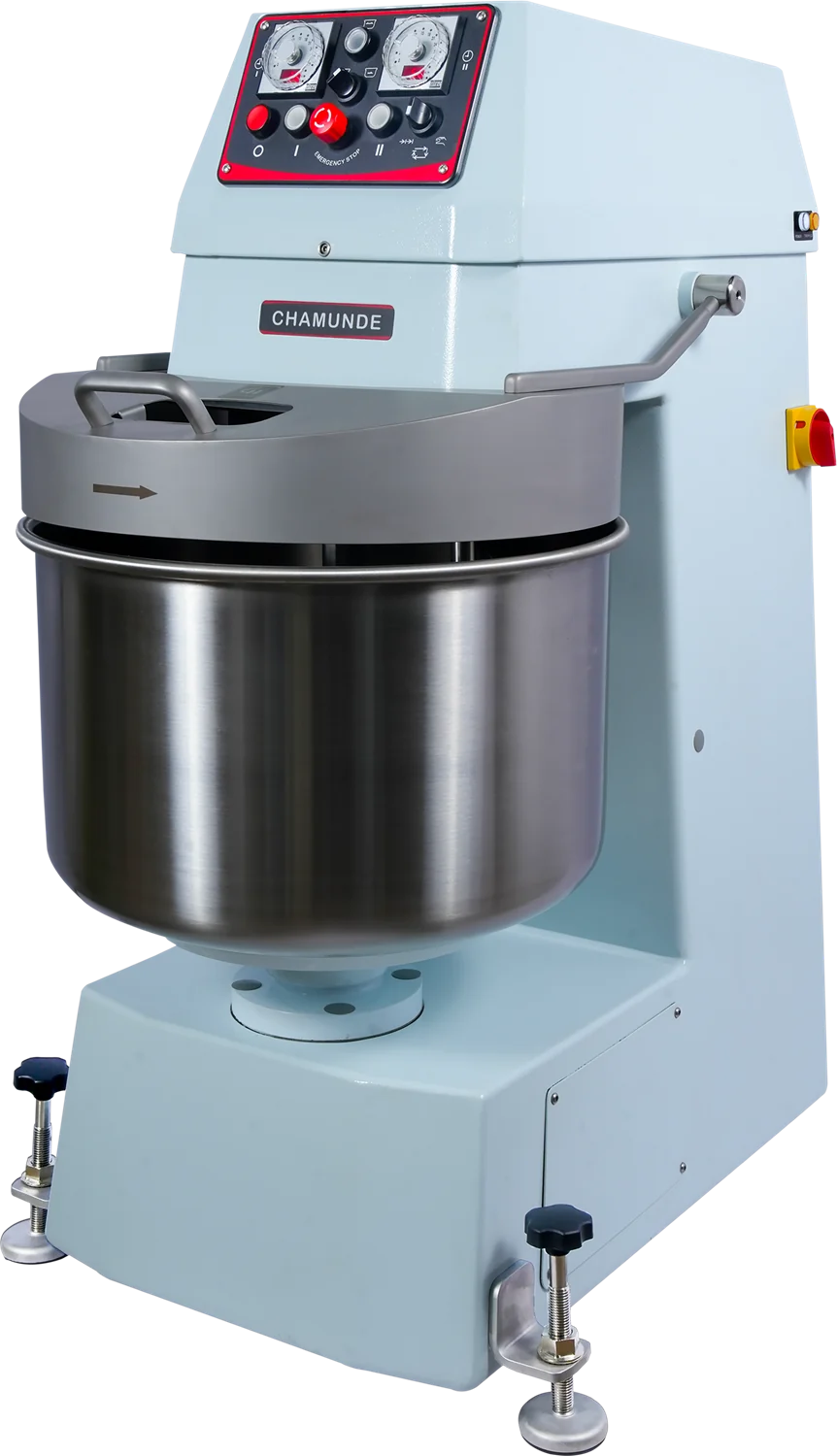
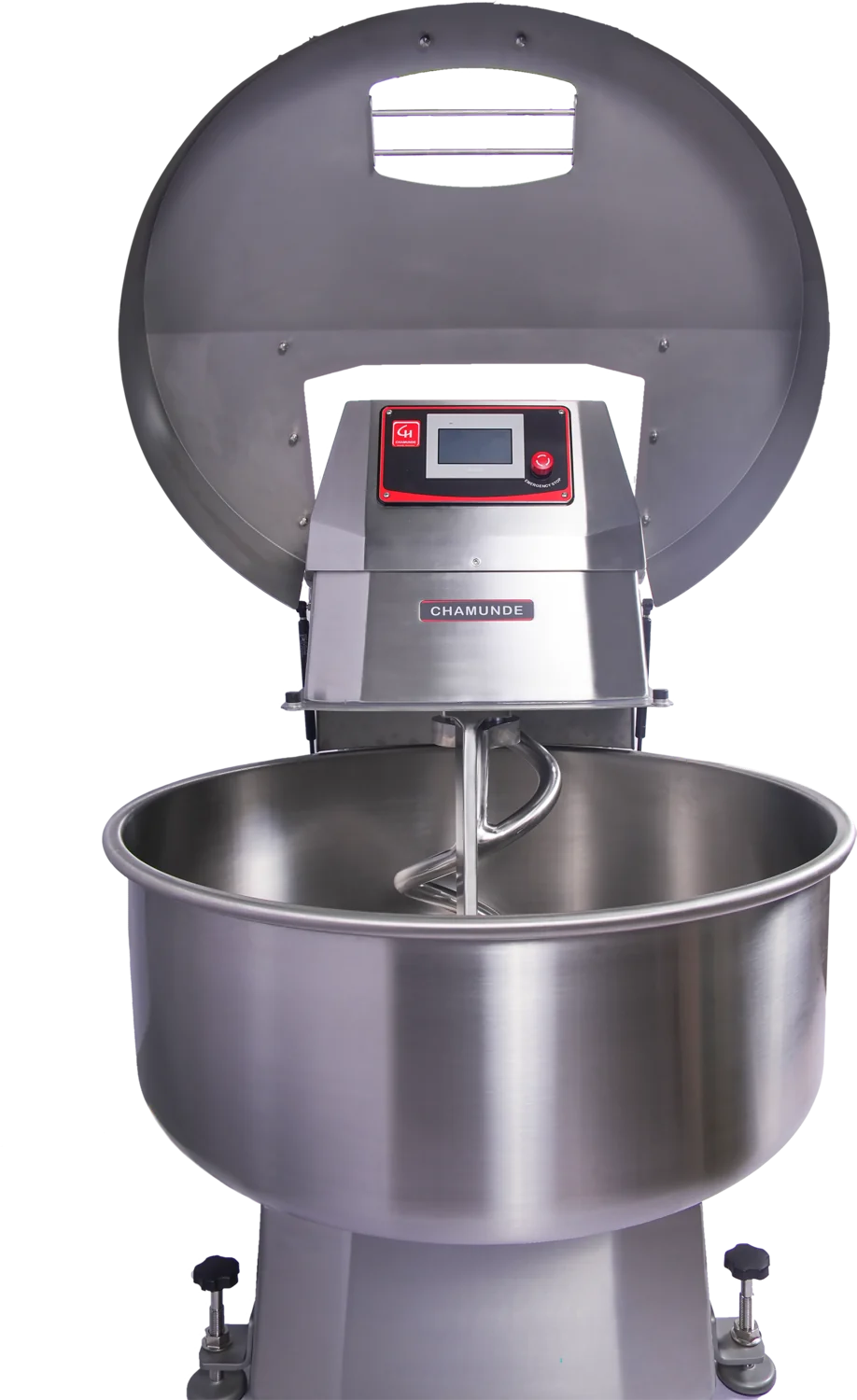
Four sizes, by flour weight.
Dough figures are at 60% water. Send us your recipe hydration if it differs significantly and we will confirm the size.
| Model | Flour / dough @60% (kg) | Bowl motor (kW) | Spiral motor (kW) | Total power (kW) | Voltage (V) | Phase | Weight (kg) |
|---|---|---|---|---|---|---|---|
| CSM 18 | 18 / 25 | 0.55 | 1.9 | 2.45 | 415 | 3 | 273 |
| CSM 30 | 30 / 50 | 0.75 | 3.0 | 3.75 | 415 | 3 | 385 |
| CSM 60 | 60 / 100 | 1.1 | 7.5 | 8.6 | 415 | 3 | 645 |
| CSM 100 | 100 / 160 | 1.1 | 7.5 | 8.6 | 415 | 3 | 702 |
Supply 415 V three phase, at 50 or 60 Hz.
Two choices to make at order.
Every CSM leaves the floor configured. Neither choice can be retrofitted later, so both are worth settling before the machine is built.
01 Body type
MS — powder coated
SS — 304 stainless
02 Panel selection
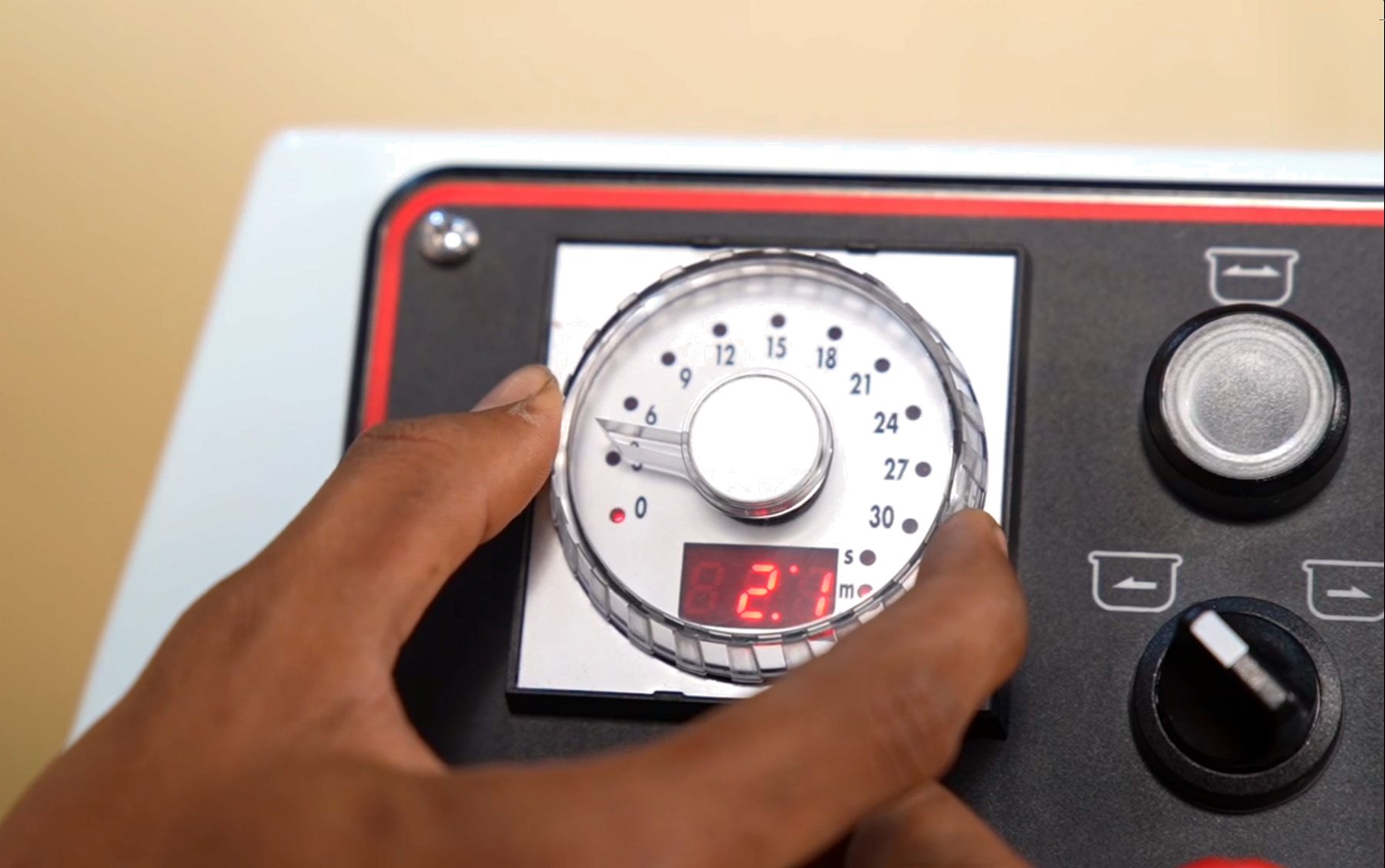
Timer panel — twin analog dials
Touch screen panel — HMI
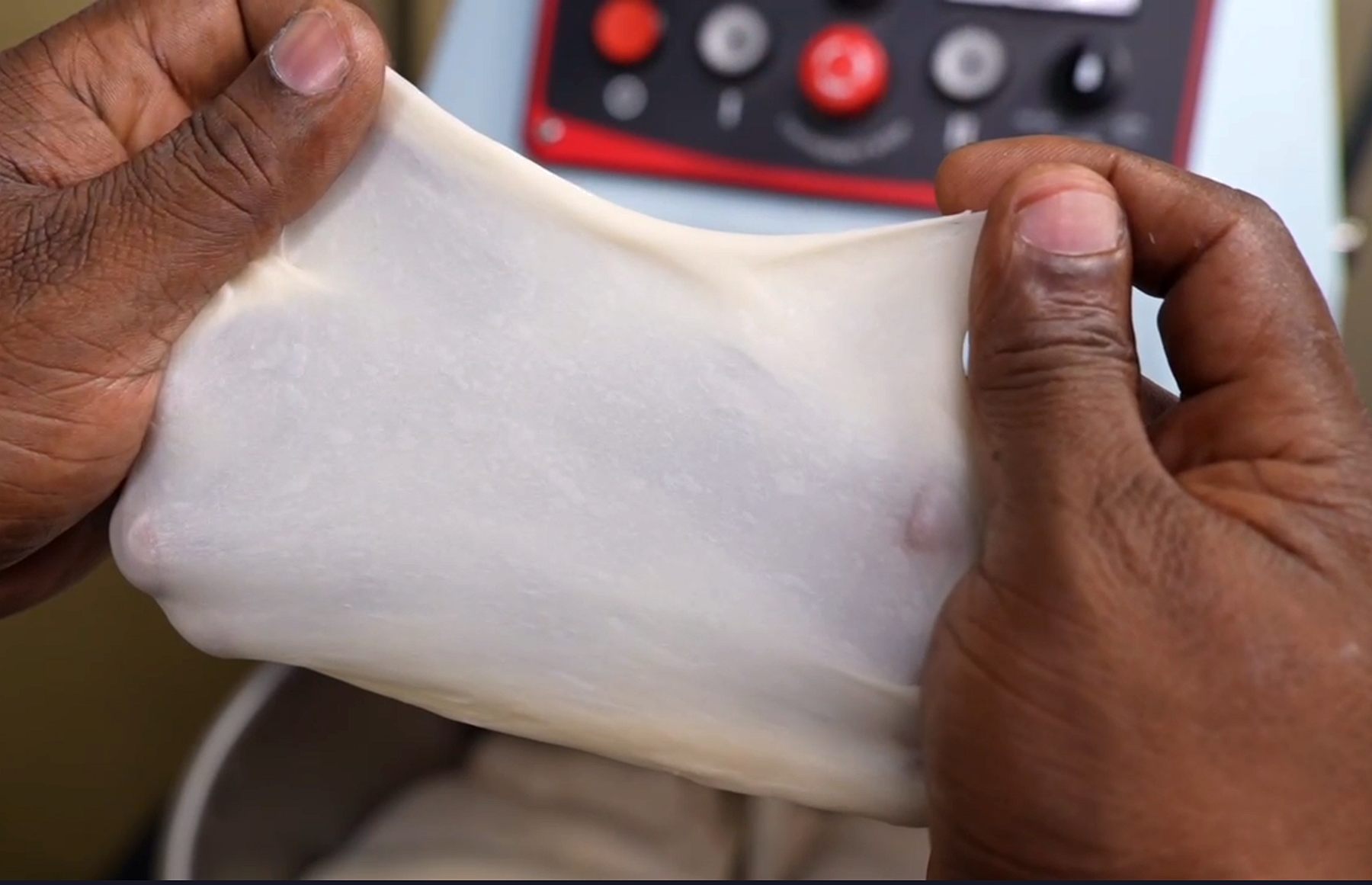
A clean window pane, every batch.
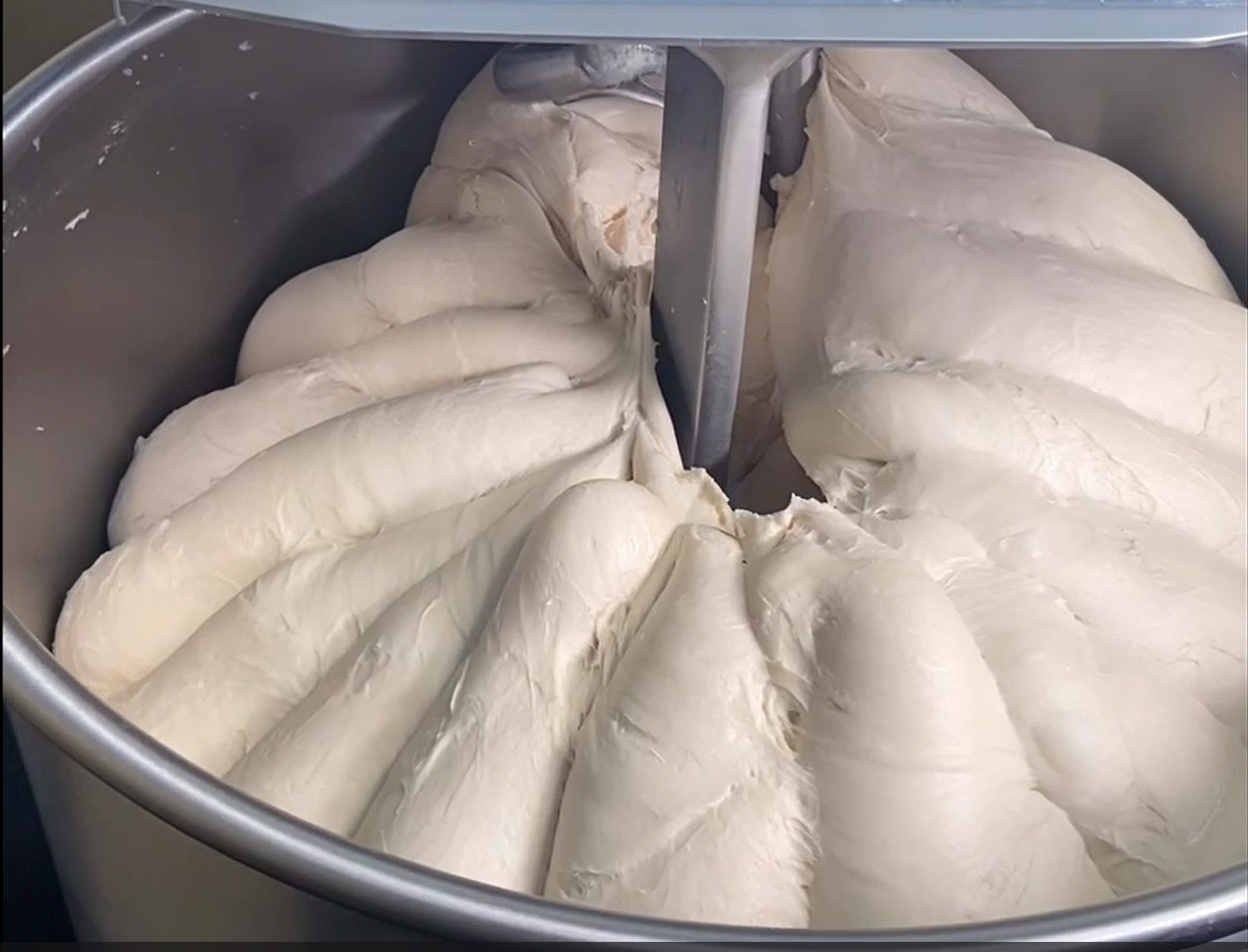
Gluten development is not a matter of opinion. The dough either stretches thin enough to see light through it, or it does not. Twelve minutes in a CSM and it does — and you can run the same test on any mixer you are considering.
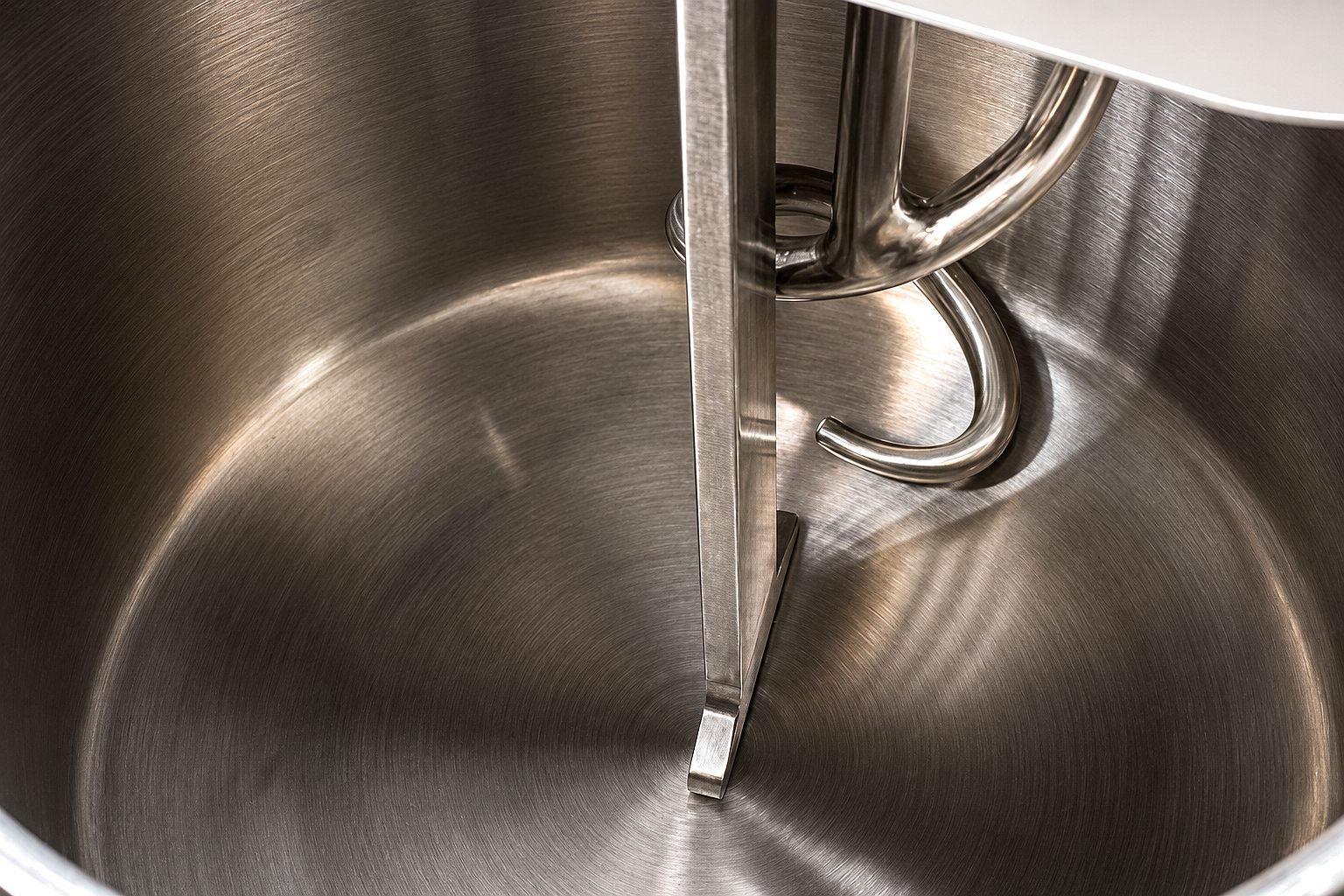
A spiral is built for bread dough and nothing else. For sponge, cream, icing and cookie work you want a planetary — most bakeries end up running both.
How much flour per batch?
Give us your batch weight and daily batch count and we will point you at the right CSM — including telling you if a smaller one is enough.